

If you are reading this with a sore that makes eating feel like punishment, you are not alone. Most advice for canker sores lives in the pharmacy aisle, because most sores heal on their own.
But there is a whole second tier of options that are more aggressive, more clinic-gated, and sometimes dramatically better at stopping pain fast.
If you have not read it yet, start with my practical baseline guide to OTC options first: Most Common Over-the-Counter Canker Sore Remedies (With Examples).
Important (Medical disclaimer)
This article is informational only. “Heavy-handed” treatments can cause harm if misused. Talk to a dentist or clinician for diagnosis and safe treatment.
The pattern nobody tells you
There are two broad strategies hiding underneath all the product names:
- Pain-focused tools: disable, seal, or shield nerve endings so the sore stops screaming.
- Prevention-focused tools: calm the inflammation and immune overreaction so the ulcer does not get bigger or keep returning.
None of this is a cure. It is symptom management, just at a higher intensity.
1) Debacterol (chemical cautery)
What it is
A strong acidic solution applied directly to the ulcer for a few seconds.
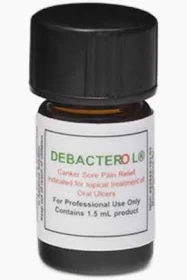
Debacterol is a chemical cautery agent sometimes used in clinical settings for canker sore pain.
How it stops pain (briefly)
- Chemically denatures proteins on the ulcer surface
- Destroys exposed nerve endings that transmit pain
- Creates a temporary coagulated tissue layer that shields the wound
Pain can drop almost immediately because the nerve endings are literally disabled.
Where you will find it
- Dental offices
- Oral medicine specialists
- Some ENT clinics
In practice, it is generally professional use only.
Pros
- Near-instant pain relief (often seconds)
- One-time application
- Can be very effective for deep ulcers
Cons
- Brief but intense burning during application
- Aggressive (a controlled chemical burn)
- Does not prevent recurrence
- Misapplication can injure healthy tissue
Best for
One big, angry ulcer that has already ruined your week.
2) Silver nitrate (old-school cautery)
What it is
A chemical cauterizing agent used for decades in dentistry and dermatology.
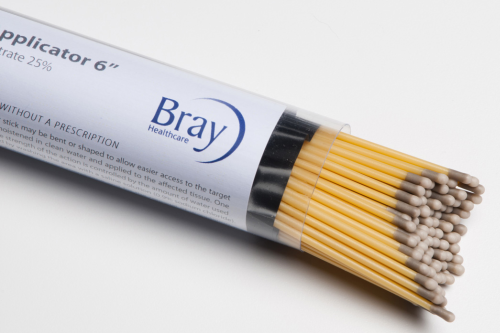
Silver nitrate is an older, widely known cautery option that can reduce pain by sealing nerve endings.
How it stops pain
- Causes oxidative tissue destruction
- Seals exposed nerve endings
- Forms a superficial eschar (a protective scab)
Same concept as Debacterol, typically weaker and less precise.
Where you will find it
- Dental offices
- Some pharmacies (often restricted)
Pros
- Fast pain reduction
- Cheap and widely known
- Often less aggressive than Debacterol
Cons
- Less precise
- Can stain tissue gray or black
- May require repeat applications
- Relief may not last as long
Best for
Small, shallow sores when Debacterol is not available.
3) Laser therapy (CO₂ or diode)
What it is
Targeted dental lasers used to treat oral soft tissue.
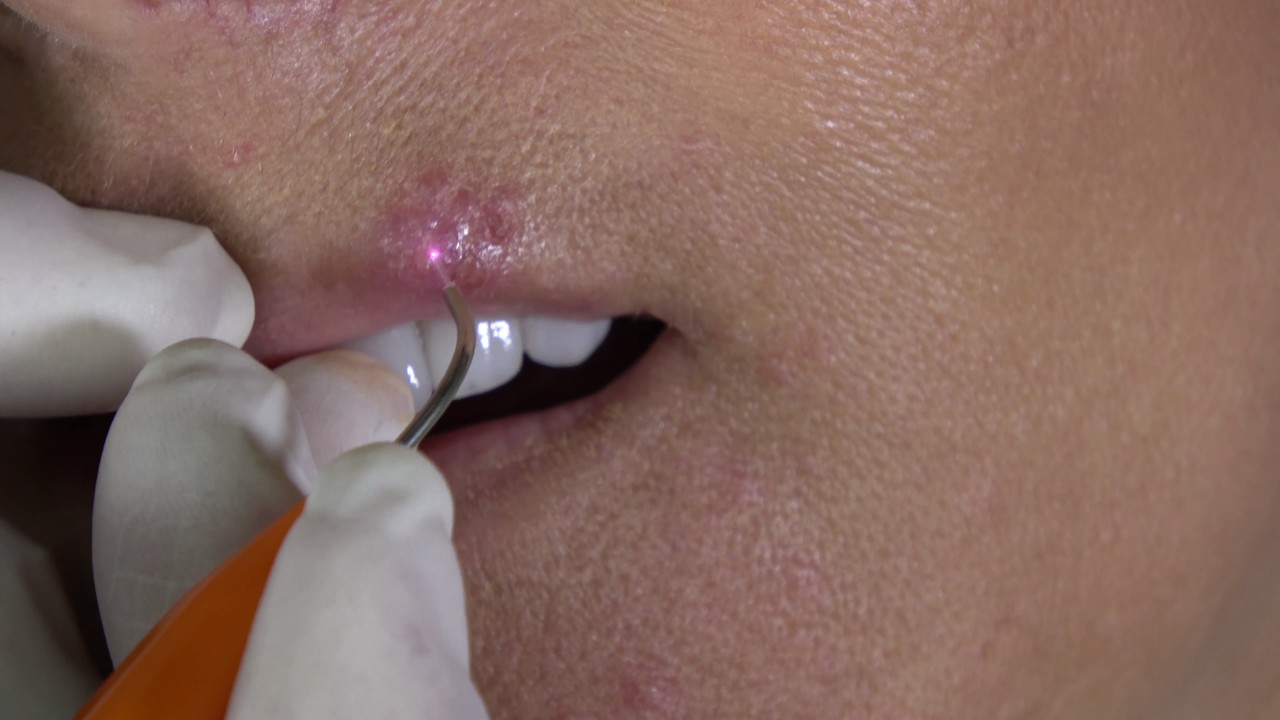
Some dental clinics use CO₂ or diode lasers for rapid pain relief and faster healing.
How it stops pain
- Seals nerve endings without applying a caustic chemical
- Can reduce local inflammatory mediators
- Can stimulate faster epithelial regeneration
Unlike cautery, lasers can be used in a way that focuses energy precisely, rather than spreading a chemical across tissue.
Where you will find it
- Modern dental clinics
- Oral medicine specialists
Pros
- Immediate pain relief for some patients
- Often fastest healing time
- No chemical burn
- May reduce recurrence at the treated site
Cons
- Expensive
- Limited availability
- Operator-dependent
Best for
Recurrent ulcers, or people who want the cleanest “high-tech” approach and can access a clinic that offers it.
4) Topical corticosteroids (prescription anti-inflammatories)
What they are
Anti-inflammatory medications applied directly to the ulcer (or, ideally, to the early lesion before it fully develops).
Common examples in clinical practice include triamcinolone dental paste and other stronger topical steroid preparations, depending on severity and clinician preference.
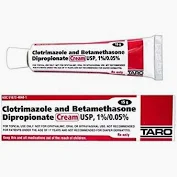
Topical corticosteroids reduce inflammation. They usually work best when started early.
How they stop pain
They do not numb nerves directly. They reduce pain by changing the biology upstream:
- Suppress local immune overreaction
- Reduce cytokines that drive tissue breakdown
- Help prevent ulcer expansion
Where you will find them
Typically as a prescription from a dentist, primary care clinician, dermatologist, or oral medicine specialist. Some milder anti-inflammatory products exist OTC, but the stronger options are usually prescription.
Pros
- Treats underlying inflammation
- Best for frequent sores or immune-driven patterns
- Can prevent growth if started early
Cons
- Slower pain relief than cautery or lasers
- Needs repeated applications
- Less effective once the ulcer is fully developed
Best for
Early-stage sores, frequent recurrences, or patterns that look immune-driven.
5) Amlexanox (forgotten but interesting)
What it is
An anti-inflammatory and anti-allergic compound used for aphthous ulcers in some places.
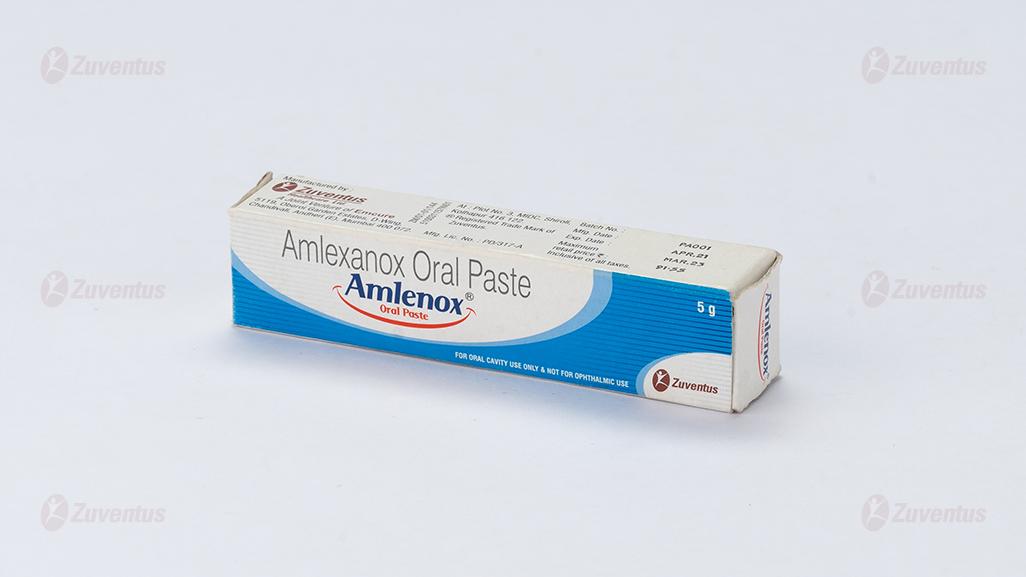
Amlexanox can be hard to find in the US. Availability varies a lot by country.
How it may help
- Inhibits histamine and leukotriene release
- Reduces immune-mediated tissue damage
Where you will find it
Availability varies a lot by country. It is often harder to find in the US than in some other regions.
Pros
- Addresses inflammation directly
- Often fewer systemic side effects than oral steroids
Cons
- Can be hard to find
- Typically slower than cautery or lasers
6) Systemic treatments (rare but real)
These are typically used only for extreme, frequent, or systemic cases, especially when a clinician suspects an underlying condition (for example, Behçet’s disease or other inflammatory disorders).
Examples include oral steroids, colchicine, and other immunosuppressive or immunomodulatory medications.
Pros
- Can reduce frequency and severity in severe cases
Cons
- Serious side effects and monitoring needs
- Not appropriate for “ordinary” occasional canker sores
Prescription and access: US vs EU (what you actually need)
Availability, not science, is often the real barrier. This section is a practical sketch, not legal advice, and it varies by country and clinician.
| Treatment | United States | European Union (varies by country) | Real barrier |
|---|---|---|---|
| Debacterol | Typically not “Rx,” but clinician-applied in practice | Often uncommon, usually specialist-gated | Clinician willingness and availability |
| Silver nitrate | Sometimes restricted, often handled in-office | Often easier in clinical settings than US, still usually clinician-gated | Availability and local practice |
| Laser therapy | Not “Rx,” but provider-performed | Often more common in dental practices | Cost and equipment |
| Topical corticosteroids | Usually Rx for effective strengths | Usually Rx | Prescription access |
| Amlexanox | Often hard to find | Mixed, country-dependent | Supply and local approval |
| Systemic treatments | Always Rx, specialist oversight | Always Rx, specialist oversight | Side effects and diagnosis |
The brutal truth (summary)
| Goal | Best fit (often) |
|---|---|
| Immediate pain relief | Debacterol or laser therapy |
| Fastest healing | Laser therapy |
| Prevent the ulcer from expanding | Topical corticosteroids (early) |
| Cheap and known | Silver nitrate (if available) |
| Severe systemic cases | Systemic medications (specialist only) |
The most effective pain-stopping tools are often provider-gated. The safest prevention-focused tools often require prescriptions. None of them are a cure.
What to do next (practical)
If OTC numbing gels and patches are not cutting it, bring this exact language to a dentist or oral medicine clinician:
- “I need fast pain control for a large ulcer. Do you offer chemical cautery (Debacterol or silver nitrate) or laser?”
- “If I get these often, can we discuss topical steroids early, before the ulcer blows up?”
- “Do my symptoms suggest anything systemic, or is this consistent with recurrent aphthous ulcers?”
And if you want to stay in the pharmacy aisle, go back to the OTC guide: Most Common Over-the-Counter Canker Sore Remedies (With Examples).