

The short version
Most over-the-counter (OTC) canker sore products do not cure canker sores. They mainly help with pain, irritation, and day-to-day comfort while the sore heals on its own.
Medical sources generally note that canker sores tend to resolve without treatment, and OTC options are often used for symptom relief. See Mayo Clinic for a clinical overview.
Important (Medical disclaimer)
This article is informational only. Always follow package directions, and talk to a clinician if you are unsure what is safe for you.
Note (Hard-to-reach sores (soft palate / uvula))
If your pain feels like “tonsillitis” but it turns out to be a canker sore in the back of the throat, the usual gels and patches often fail just because they cannot reach or stick.
I wrote up the most brutal version I have had here: The Uvula Canker Sore.
If you are also curious about the non-pharmacy side of the internet, I put together a companion post on natural remedies for canker sores from around the world. Think of it as a collection of what people try for comfort when OTC options feel too harsh, too temporary, or just not worth it.
1. Topical pain-relief gels (numbing gels)
These are gels you apply directly onto the sore to numb the pain.
Example: Orajel 3X Medicated Mouth Sore Gel (often formulated with benzocaine).
What it does: Temporarily reduces pain, which can make eating and talking less uncomfortable.
Benzocaine is a common local anesthetic used for numbing. It works by dulling nerve signaling in the area. See Wikipedia: Benzocaine for background.
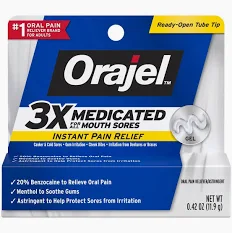
Orajel 3X Medicated Mouth Sore Gel, a common benzocaine-based option for temporary pain relief.
When gels feel most useful
- Small, easy-to-reach sores: Inner lip, cheek, near the front of the mouth.
- Short bursts of relief: Before meals, before a meeting, or before bed.
Common downside
- They can wear off quickly: Saliva and friction can remove the gel, especially on the tongue or near the back of the mouth.
2. Benzocaine-based liquid treatments (protective liquid anesthetics)
Liquid anesthetics can be easier to apply to awkward spots, and some form a thin coating that helps reduce irritation.
Example: Kank-A Mouth Pain Liquid (benzocaine-based liquid that forms a protective coating).
Typical use: Apply directly with the built-in applicator to the sore.
These can be especially helpful when a gel does not stay in place, or when the sore is hard to target precisely.
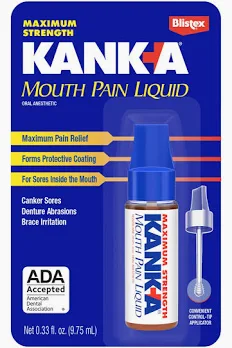
Kank-A Mouth Pain Liquid, a benzocaine liquid that forms a protective coating for hard-to-reach sores.
3. Protective patches and barrier products (canker covers)
Patches, covers, or dissolving barrier products aim to shield the sore from friction caused by food, teeth, and saliva.
Why people like them: Once applied, they create a physical barrier. That can make eating less miserable because the sore is not being scraped every time you chew.
Example concepts: “canker covers” and oral patches you stick onto the sore. Many are sold by common retailers. For example, you can find “canker cover” style products on Walmart.
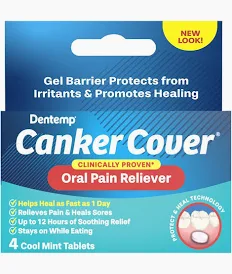
Dentemp Canker Cover, an example of a barrier product that helps shield the sore from irritation.
A practical tip
Barrier products often work best when the area is as dry as possible. If the instructions say to dry the area first, it is worth trying. Saliva makes adhesion harder.
4. Antiseptic or gentle mouth rinses (alcohol-free options)
Some people reach for rinses that help keep the area cleaner and reduce irritation. Alcohol-based mouthwash often burns and can feel brutal on an ulcer, so many prefer alcohol-free options.
Example: Hydrogen peroxide-based mouthwashes sold commercially for minor oral irritation. One example product line is Colgate Peroxyl.
Home approach: Saltwater rinses and baking soda rinses are common home techniques some people find soothing. See WebMD for general consumer guidance.
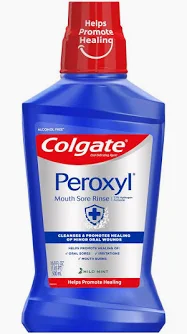
Colgate Peroxyl, a peroxide-based rinse that some people use for comfort and oral hygiene around ulcers.
What rinses can realistically do
- Comfort: Some people feel less sting after a gentle rinse.
- Hygiene: Keeps the area from feeling grimy, especially if brushing is painful.
They usually do not “kill” a canker sore. Canker sores are not typically a simple infection you can rinse away.
5. Oral pain relievers (ibuprofen, acetaminophen)
Oral pain medications do not act directly on the sore, but they can reduce overall pain and help you function.
Common OTC options include ibuprofen or acetaminophen. These are not canker-sore specific, but many people take them when pain interferes with eating, sleeping, or talking.
Always follow package directions and confirm safety if you have medical conditions or take other medications. See WebMD for an overview.
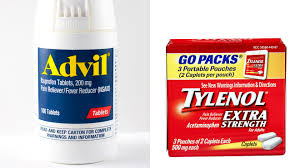
Oral pain relievers (for example, ibuprofen or acetaminophen) can help with overall discomfort even though they do not treat the sore directly.
6. Debacterol (specialized topical treatment, usually clinician-applied)
Some people ask about stronger topical agents like Debacterol, which is a chemical cautery agent used in some clinical settings.
If you are at the point where OTC gels and patches are not enough, I wrote a companion guide to the more aggressive, clinic-gated options (chemical cautery, lasers, and prescriptions): The Heavy-Handed Ways to Stop Canker Sore Pain (Cautery, Lasers, Prescriptions).
Debacterol contains sulfonated phenolics and sulfuric acid and is applied topically. It is not a typical OTC gel you casually buy and use at home. See Wikipedia: Debacterol for background.
Some clinicians discuss it as an option in certain scenarios, but it is generally something you would talk about with a dental or medical professional rather than self-applying.
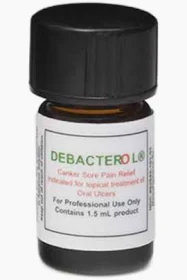
Debacterol is a chemical cautery agent mentioned in some clinical contexts. It is not a typical pharmacy aisle gel for casual home use.
Tip (A reality check)
If you are browsing forums, you will see wildly mixed experiences with Debacterol. That variance is common across many canker sore remedies.
How these products fit into everyday use
Most OTC remedies are about pain relief and comfort, not dramatically speeding up healing. For many people, canker sores still follow their usual timeline even with OTC products.
If you want a simple, practical workflow, many people combine approaches, for example:
- Rinse first: Saltwater or alcohol-free rinse.
- Then protect or numb: Apply a gel, liquid coating, or patch.
- Time it around meals: Use numbing options shortly before eating.
The goal is not perfection. It is to make the sore stop hijacking your whole day.
When to stop self-treating and get help
Consider talking to a healthcare professional if a sore:
- lasts longer than two weeks
- is unusually large
- happens very frequently
- comes with fever or other systemic symptoms